In the wake of cuts to international aid, Action Against Hunger calls for funders to support the systems that detect hunger and malnutrition before they become emergencies.
Global cuts to international aid are weakening the systems that detect hunger and malnutrition before they become emergencies. For Canadian charities and foundations, that raises a question about how we fund relief. When we pay for food and treatment, do we also support the people who can tell us where they will be needed next?
We are asking foundations and philanthropists to fund the evidence as well as the relief, by backing the basic infrastructure that is needed to understand who is in need, what support they require, and how we can coordinate proven interventions at a global to local scale so we can ensure that the limited resources available are used to the highest impact, saving the most lives.
We are asking foundations and philanthropists to fund the evidence as well as the relief.
Last year, famine was confirmed in parts of Gaza and Sudan. In both places, conflict displaced families, disrupted farming and markets, and blocked access to food and humanitarian assistance. Rising food prices and growing rates of child malnutrition can signal that conditions are worsening, provided someone can still collect and report those figures.
In 2025, the US-funded Famine Early Warning Systems Network was suspended for months before it resumed reporting. During the suspension, humanitarian agencies lost one vital source of evidence they use to decide where to send staff, supplies, and funding. A single donor’s decision had interrupted a service used across the humanitarian sector.
Canadian funders can help support the critical humanitarian infrastructure that keeps that evidence available. Organizations delivering nutrition services depend on surveys, trained local teams, and coordination that individual project grants may leave underfunded. Some of the expertise needed to support that work is already here. Action Against Hunger Canada hosts SMART (Standardized Monitoring and Assessment of Relief and Transitions). Its surveys measure child malnutrition and mortality so governments and humanitarian organizations can assess the scale of need and direct resources in the most targeted, efficient way possible. We also support the Global Nutrition Cluster’s work to coordinate nutrition responders in emergencies.
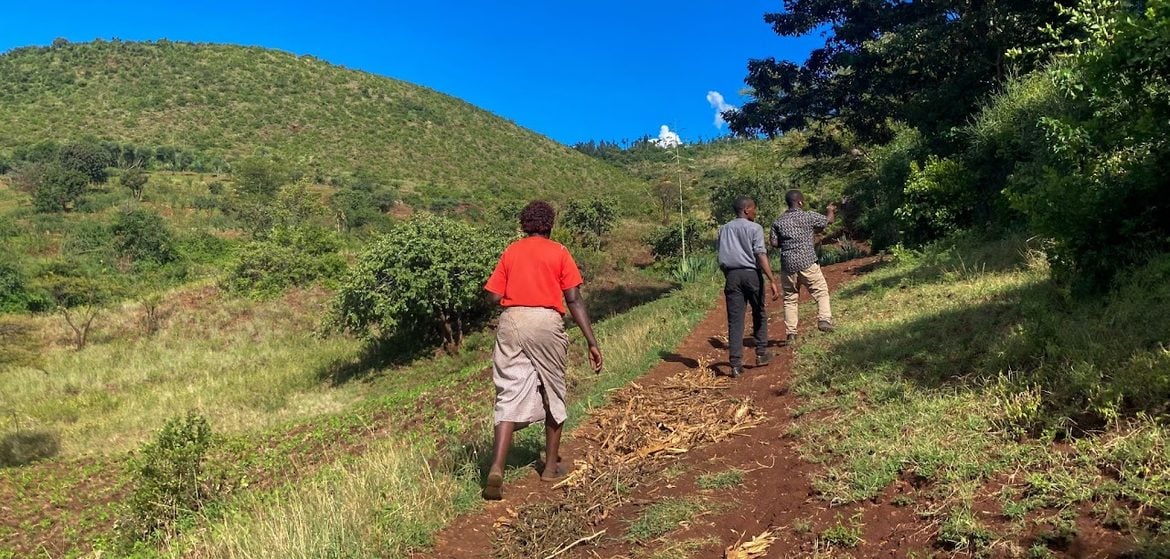
PHOTO: KAITLYN SAMSON
The value of this work extends beyond any one organization’s programs. A reliable survey can inform several agencies’ plans and help donors identify gaps in the response.
Consider a survey that finds high rates of child malnutrition in an area where few treatment sites are operating. Local teams can use the findings to decide where to extend services, and donors can direct funding to that gap.
Supporting the people who collect, check, and interpret the data is therefore foundational to delivering effective assistance. Funders should be able to recognize that contribution even when it cannot be expressed as meals distributed or children treated by a single grantee.
Acting early is also the fiscally prudent choice. The World Bank estimates that each US$1 invested in scaling up proven interventions against undernutrition could generate US$23 in economic benefits. Its financing estimate is equivalent to roughly US$17 per child under five per year. United Nations agencies also report that anticipatory action can yield up to US$7 for each dollar invested through avoided losses and added benefits. These are estimates across specific interventions and settings, rather than a guaranteed return on any individual grant. They make a strong case for funding prevention alongside emergency treatment.
Canadian organizations know the pressure that food insecurity places on families and services. A University of Toronto analysis of Statistics Canada data found that roughly one in four people in Canada lived in food-insecure households in 2025. That was 9.8 million people, including 2.4 million children. In Canada, inadequate income is central to the problem. When rent and other essentials consume a household’s budget, families may compromise the quality of their diets before they begin skipping meals. Food assistance meets an immediate need, while lasting progress also requires policies that improve people’s financial security.
Our experience at home should strengthen Canada’s commitment abroad. The contexts differ: food insecurity in Canada and famine in a conflict zone cannot be treated as interchangeable. Both require us to understand what prevents people from obtaining nutritious food and to shape the response around those conditions. Canadian charities can work directly with local partners to build capacity. Those partners understand their communities and should help determine how resources are used.
This also means being precise about what we measure. Food insecurity means lacking reliable access to sufficient, safe, and nutritious food that meets dietary needs and food preferences; hunger describes deprivation, while malnutrition concerns the nutrients the body receives and uses. Counting food delivered cannot, by itself, tell us whether nutritional needs are being met. Governments, companies, and philanthropic funders should agree on measures suited to the problem they are addressing, drawing on technical expertise where needed.
Supporting the people who collect, check, and interpret the data is therefore foundational to delivering effective assistance.
What would this mean for the way our sector works?
First, treat nutrition and food-security data as public infrastructure. Canada should help finance a shared, multi-donor system for early warning and nutrition surveillance, so that no single government’s budget decision can switch off the world’s hunger alarm. Philanthropic foundations can contribute to this work through pooled, multi-year support for survey teams, training, and reliable data systems. Funding agreements should protect the independence of findings and enable participating organizations to use the evidence. A shared resource needs shared responsibility for keeping it available.
Second, put money on the table before disaster strikes. A dedicated share of Canada’s humanitarian budget should be pre-arranged and released when agreed forecasts signal a coming crisis. Philanthropic funders can apply the same principle: work with humanitarian partners to agree in advance what evidence will trigger funding and what action it will support. Flexible grants can allow teams to prepare supplies or extend services as risks increase. Those decisions need to include local responders, who must have the resources and authority to act.
Third, build on Canada’s long-standing leadership in nutrition. Delivering lifesaving interventions depends on knowing where need is greatest, and the data that provide this knowledge require their own sustained support. Canadian charities and foundations can make a coordinated case for predictable, multi-year public funding to prevent, detect, and treat child malnutrition. The Government of Canada supports the critical infrastructure that guides nutrition responses: data generation and analysis, coordination, and technical assistance. But the gap left by Western governments’ international aid cuts is too large for a few actors to fill alone. Philanthropy can help sustain this infrastructure, so that every dollar raised is used as efficiently and effectively as possible and technical teams can save the most lives.
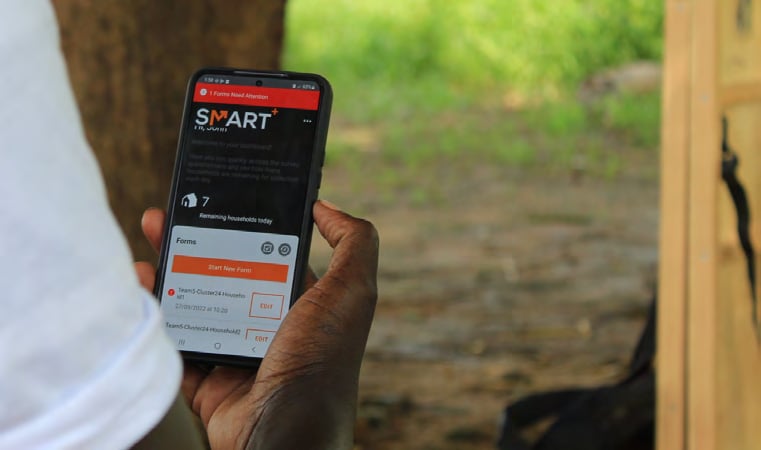
Fourth, build partnerships around a defined problem. Canadian technology companies can contribute expertise to improve the collection and management of nutrition data; Canadian universities can help evaluate whether better information leads to earlier or more effective services. SMART+ is a digital platform built on the SMART survey method. It helps teams collect and check data in the field so they can decide sooner where to direct resources. Funders can support development of the platform and training for the local teams that use it. Partners should agree from the outset who will maintain the critical tools, how sensitive information will be protected, and how the people using them will shape improvements.
Accountability should follow the same logic. Alongside the number of people reached, a funder could ask whether survey findings changed where services were delivered, whether local teams could act sooner, and whether gaps in coverage were addressed. These questions connect investment in data to decisions and services. They also give organizations a reason to share what they learn, including when an approach needs to change.
Global hunger fell for a third straight year in 2025, to about 645 million people. The decline follows a sharp rise in hunger during the pandemic. That progress is real, and it is fragile. Canada has expertise that can help sustain it. For charities and foundations, as a first step, we urge every Canadian foundation to review its nutrition grants and direct part of that support to pooled, multi-year funding for survey teams, local capacity, and early-warning data, coordination, and technical assistance. And then to examine whether funding practices allow partners to act on the evidence soon enough. We can support the surveys, local capacity, and coordinated services that make prevention possible, and advocate for sustained public investment. Keeping the hunger alarm on matters only if we are prepared to respond when it sounds.