Like all social movements, the generational struggle for women’s rights and gender equality ebbs and flows. But the current moment feels different. With feminist movements facing a perfect storm of interconnected threats, how philanthropy responds – or not – is a political choice.
In the Northwest Territories of Canada, Indigenous midwives and Elders in the Northern Birthwork Collective are drawing from the wells of ancestral and cultural knowledge to support families through family planning, pregnancy, and birthing.
In Turkey, after a massive earthquake struck in February 2023, the local network Karaçay Coordination provided adaptive emergency response. Starting with search and rescue, they then shifted to distribution of aid before serving as a coordination hub for continuing education and psychosocial support.
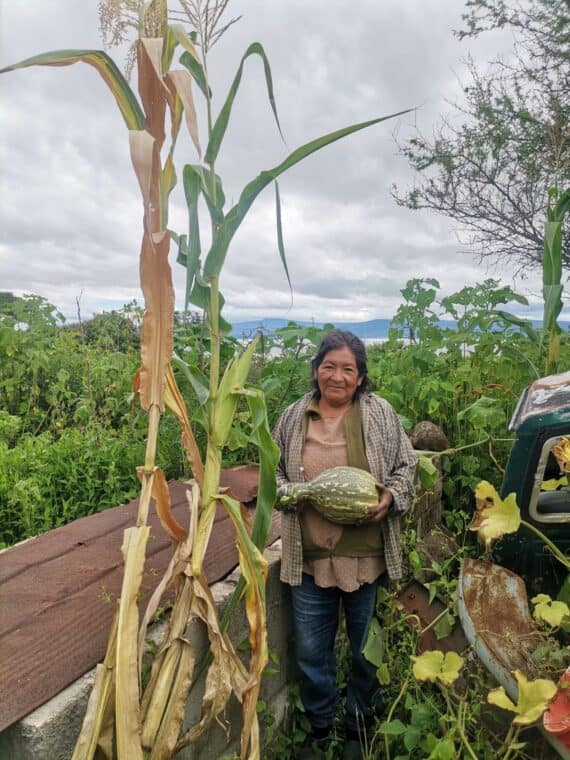
In Mexico, the Benita Galeana School supports women’s leadership and autonomy alongside agro-ecological practices, contributing to soil regeneration, reduced dependency on costly chemicals, and greater food security and financial independence.
These are just a few examples of how women organize in response to ever-changing contexts, threats, and opportunities – and how feminist philanthropy can be catalytic in enabling them to do so.
For a two-part series, The Philanthropist Journal interviewed leaders from eight organizations to learn more about feminist philanthropy and how it is responding to the current moment. This first part delves into core values and interconnected threats as essential context.
Core values and principles
Feminist philanthropy is rooted in feminism, which is the belief that everyone deserves equal rights and opportunities, regardless of their gender and sexual orientation.
Rather than making decisions in far-away boardrooms, feminist philanthropy is grounded in and reflective of the people, communities, and movements it serves. And rather than pretending to know what’s best for others, those practising it are self-aware of their positionality and clear-eyed about what they are – and are not – well-placed to do.
Whether it’s in the form of a critique, an assertion, or redistribution, power is at the heart of feminist philanthropy.
For Gabriela Toledo, co-director of Fondo Semillas (Seeds Fund) in Mexico, it starts with a clear premise: “Inequality is structural and power is concentrated.” This starting point necessitates a critical understanding of the contexts, the root causes of injustice and how they’re linked, and philanthropy’s role within that.
“Are we sustaining the status quo, or are we challenging the status quo?” asks Laila Alodaat, executive director of Prospera International Network of Women’s and Feminist Funds. “Are we funding so [women] survive a little bit better, or are we funding because we want them to win this fight?”
Much like the struggles for rights, freedoms, and justice, feminist philanthropy itself is intersectional and interconnected. Every person has multiple identities – sex, gender, ethnicity, physical ability, et cetera. Everyone also faces multiple barriers, some of which are directly linked to these identities. Understanding how these identities and circumstances intersect with and affect each other is key to ensuring that philanthropic support is appropriate, directly relevant, and wanted.
The issues may be complex, but philanthropy’s responses do not have to be complicated. As Mitzie Hunter, president and CEO of the Canadian Women’s Foundation, explains, it’s as simple as prioritizing communities that most need the assistance they can provide.
Those working in feminist philanthropy are also acutely aware of who makes decisions and how, who has access to money, and the power of redistribution of wealth.
As a survivor of the Assad regime and the war in Syria, Sana Mustafa experienced first-hand how little money going through UN agencies and international organizations trickled down to refugees and their supporters who actually do the work on the ground. “It made me realize how money is power,” says Mustafa, now the Equality Fund’s interim associate vice president of philanthropy. “It made me think about how we can move money into the hands of those who must have it.”
In the mainstream philanthropic sector, Mustafa continues to see how those who have lived experience and who are closest to issues such as climate breakdown, forced displacement, or racial injustice are systematically under-resourced, despite knowing best what is needed and what works. Policies are set, decisions are made, and programs are designed about people, but not with them. That approach is not only ethically wrong, she says; it is also inefficient. In comparison, if you look at any business, “their user would be at the heart of the design and partnership.”
We can’t make meaningful change in one area or region while shying away from another.
Laila Alodaat, Prospera
Whereas mainstream philanthropy often funds specific issues in siloes, feminist philanthropy sees the inherent relationships between them. And no matter how local one struggle might be, it is part of a global movement. “We can’t make meaningful change in one area or region while shying away from another,” Alodaat says. “That doesn’t mean we need to do everything all the time, but we need to understand that the struggle is interconnected.”
A key feminist critique of philanthropy is that its wealth is sourced from and embedded within the extractive capitalist market economy. Some feminists may be deeply uncomfortable with, if not outright opposed to, engaging with and benefiting from this system. However, some see it as an opportunity for subversion and redistribution of power and legitimacy.
“The tension between the financial system and social transformation is not paralyzing,” Toledo says in an email (translated from Spanish). “It is a terrain for leadership.” For her, feminist philanthropy is “a tool for structural transformation.” It is about flipping the power dynamics and supporting communities who are advocating for structural change, including through flexible funding that can be deployed where it is most needed. “Funding feminist movements is not neutral,” she says. Where money moves and how it gets there is decidedly political.
And crucially, feminist philanthropy is about relationships, solidarity, and sisterhood. The people, communities, and movements it serves are at the heart of everything. Mutual trust and accountability are the north stars, and collaboration is the default. “At the end of the day, we are really partners,” Mustafa says. Acknowledging the many different forms of privilege and power, she says that “this movement will only succeed if all of us come together in an equitable manner.”
A perfect storm of interconnected threats
Even with these deeply held convictions, feminist movements and their supporters in philanthropy are all too aware that they have their work cut out for them. The current threats to women’s rights and gender equality are many and compound existing issues such as high rates of femicide, domestic violence, and violence against Indigenous women and girls and two-spirit and queer people. Though by no means exhaustive, five interconnected categories emerged from our interviews with philanthropy leaders.
Lebanese feminist Zeina Abdel Khalik (executive director of the Doria Feminist Fund in the Middle East and North Africa) understands these struggles first-hand. “The compounded crises . . . the conflicts, the shrinking civic space all intersect to make it more difficult for feminist movements to thrive,” she says. In some contexts, “they’re barely surviving.”
1) Economic uncertainty and inequality
For much of the world, the cost of living is increasing, and economic and political uncertainty pervade daily life. Economic downturns and high unemployment are linked with more conservative views on gender roles. Austerity measures, public-sector job cuts, and increased reliance on unpaid labour also disproportionately affect women. At the same time, economic inequality and extreme concentration of wealth have never been higher. The 12 richest billionaires (all men) hold more wealth than the poorest 50% of people worldwide.
This not only makes it more difficult for women’s rights and feminist activists and organizations to sustain themselves day-to-day; it also puts a target on their backs. “It’s not uncommon for marginalized groups to be scapegoated as a way to distract from the root causes of inequality,” says Ruth Goba, executive director of the Women’s Legal Education & Action Fund in Canada. “We see this happening with trans people, migrants, and women, who are facing increased attacks.”
2) Authoritarianism and threats to democracy and civic space
The ultrarich – particularly Silicon Valley executives – also have unprecedented access to political power, influencing the institutions and decision-making processes that shape our lives and fuelling right-wing populism.
According to the 2026 Democracy Report, 74% of the world’s population now live in autocracies. Several previously “stable” democracies, including the United States and the United Kingdom, are lurching – if not racing – in this direction.
These shifts are marked by attacks on freedom of expression and press, repression of civil society, declining rule of law and rollback of specific rights (including basic reproductive healthcare), and erosion of checks and balances on executive power. Another hallmark is governments’ use of regulatory frameworks such as financial, banking, and tax laws to restrict how non-profits and civil society can operate.
3) Militarization, armed conflict, and forced displacement
When a country is in the middle of or preparing for armed conflict or war, it wrenches political attention and institutional and financial resources away from non-negotiable societal needs such as healthcare and education. “Women’s rights and gender equality seem to move down to the bottom of the list,” says Petra Tötterman Andorff, secretary-general of the Kvinna till Kvinna Foundation in Sweden.
Armed conflict and war have multiple direct and knock-on effects on women’s rights and gender equality. More than 60 million forcibly displaced and stateless women and girls face higher risks, and an estimated 70% of women in humanitarian contexts experience gender-based violence. Armed groups increasingly use sexual violence, including rape, as a tactic during conflicts and war.
Women are also rarely included in peace negotiations, recovery, and reconstruction, despite evidence that they help create better and longer-lasting outcomes. And activists are calling for significant reform to funding for women’s organizations in the midst of conflict and war, including in Ukraine.
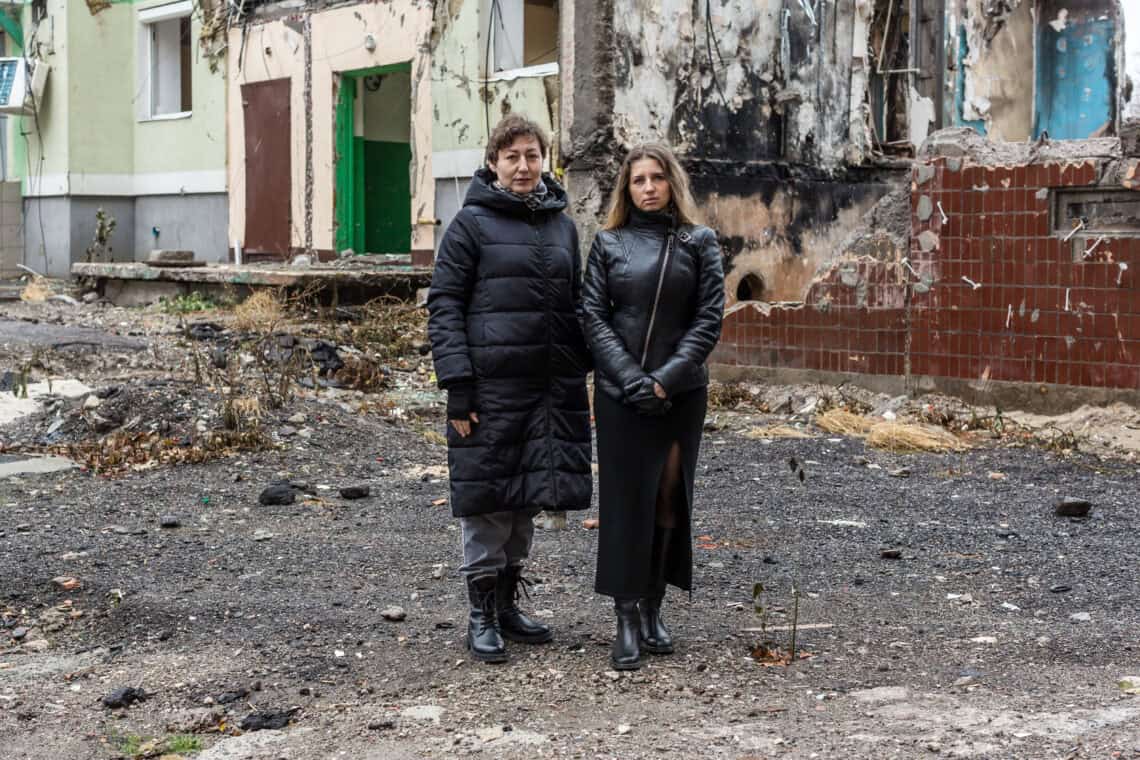
Armed conflict and military interventions are also closely linked to fossil fuels, the main cause of human-induced climate change and a significant driver of forced displacement itself. Nearly half of all forcibly displaced people are bearing the brunt of both conflict and the adverse effects of the climate crisis, with women and girls particularly affected. (Meanwhile, oil and gas companies continue to make record profits.)
4) Threats to multilateralism and backlash against women’s rights and gender equality
Lawyer Laila Alodaat sees clearly what we’re facing. The international rules-based order is at risk, she says, and “nobody’s rights and freedoms and legal system [are] safe.”
Human rights and feminist leaders witness in real time how the multilateral system rallies in support of some human rights issues while blocking action on others. Reflecting on the stark contrast between international responses to Russia’s 2022 invasion of Ukraine and Israel’s war on Palestine (which human rights experts and scholars have concluded is genocide), Andorff says that “it became very clear to many people around the world that there are different standards that different countries are held to.”
Women who stand up for human rights also face specific threats, including physical attacks, online harassment and hate speech, and sexual violence. According to a 2026 report on women human rights defenders, 69% of activists surveyed have been threatened and harassed; 57% identify their own governments as the primary actors behind this harassment. Authoritarian actors purposefully use disinformation and anti-gender sentiments to deepen social division and justify repression of activists.
Transnational mobilization certainly isn’t dead. However, it is being co-opted by the far right. In recent years, several forces have converged in a concerted attack on gender equality and those advancing gender justice. Ironically, Alodaat says, they have learned from the feminist movement: they are thinking with abundance, acting globally, and using trust-based funding to back a global fight.
How philanthropy responds to all of this is key. “To build a norm, it takes a generation,” Alodaat says. “And no, I can’t do it in a project that takes nine months and [makes me] report on it six times.”
5) Funding cuts and internal challenges in philanthropy
In 2025, governments made historic cuts to their official development assistance, with more than a 23% drop from 2024. The United States alone was responsible for about three-quarters of this decline. In some cases, governments are cutting international aid to fund the increase in defence spending.

These cuts, part of a broader wave of defunding, have hit women’s organizations and feminist movements hard. “Feminist movements in [the Middle East and North Africa] have always been requested to do a lot with so little resources,” Khalik says. “Now with the funding cuts . . . they’re requested to do even more with barely anything.”
There are also systemic challenges within philanthropy. “Feminist organizations have long faced precarity when it comes to funding,” Goba says. Many operate on shoestring budgets while trying their best to meet growing demand for their services. Funders are not only not matching those increasing needs; some are reducing or removing their support.
Feminist organizations have long faced precarity when it comes to funding.
Ruth Goba, Women’s Legal Education & Action Fund
In addition, although feminist movements are intersectional by nature, most funding is siloed. Out of the US$4.1 billion in documented human rights funding in 2019, only 1.2% (US$50.2 million) considered gender, climate, and environment together.
Severe internal disparities within conventional philanthropy mean that certain people and groups receive a disproportionate amount of the already limited funding, and others are left out. Foundations in the Global North control 99% of global human rights funding, and 88% goes to organizations based there. Indigenous women’s organizations receive only 1.4% of global funding for women and girls. As the Human Rights Funders Network writes, “Our field will not change if we don’t address bias, shift power, and close the trust gap in philanthropy.”
The generational nature of feminist movements
In the midst of a seemingly endless barrage of crises and setbacks, taking a longer view reminds us that feminist movements around the world have mobilized and pushed for significant progress in women’s rights and gender equality for more than 100 years.
“From the US and Canada to the Global South, women and girls are the first to be exposed to vulnerability when something happens, but also the first to deal with it,” Sana Mustafa says. “They are there to stay. They don’t give up, and they tend to be very resilient.”
Trust in collective power.
Gabriela Toledo, Fondo Semillas
Through acts both large and small, women and feminist leaders have created ripple effects that cross borders and even oceans. Some of these ripples appear to quietly dissipate as they lap the seemingly immovable shores of injustice. Others gain inexorable momentum, building the kind of strength and power that can only come from the depth of generational movements.
Feminist movements are inherently dynamic and evolve over time. They gain and lose ground in fits and starts; a legal protection that took decades to enshrine can be overturned with the stroke of a pen. They are also intergenerational and multi-generational. Movement leaders know that deeply embedded systems of injustice cannot be uprooted overnight, and conservative backlash often follows progressive advances. The key is to take care of each other and keep marching forward by building community, building leadership, and building power.
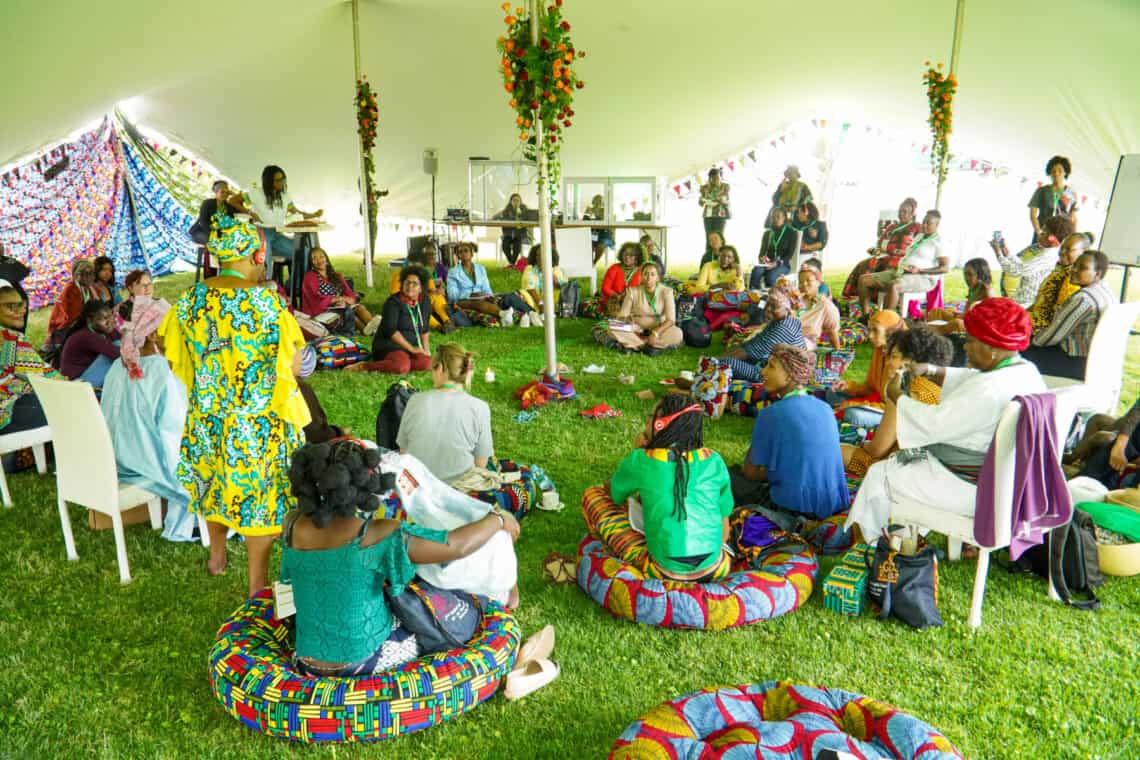
Feminist movements exist and persist independent of philanthropy and government funding – but they do not exist in a vacuum. Certain forms of support, including feminist philanthropy, can and do play a catalytic role in enabling movements and their leaders to respond, recover, and reorganize in increasingly complex times. How philanthropy meets the moment – or not – is a political choice.
When Gabriela Toledo reflects on what advice she would share with her younger self, it could easily double as a message for others in the sector as well. “Trust in collective power,” she says. “Remember: your legacy will not be the position you held or the budget you managed; it will be how much you helped to redistribute power.”
The second article in this series focuses on how feminist philanthropy works in practice and how its unique approach enables feminist movements to meet the moment and address these interconnected threats.