Black non-profits have many stories waiting to be told about the impactful work they're doing, Nadia Tchoumi writes. But the resources and capacity required to tell those stories are lacking, compounded by a relationship with the media that has been historically hostile.
It was while doing drop-ins at high schools throughout the Niagara Region that Ijeoma Michael began to hear from Black students about the racism they were facing. Very soon, it became clear there was a gap: these youth knew the challenges, but they didn’t have agency. The absence of a collective voice made advocating for change difficult. That’s where the Black Student Alliance (BSA) came in.
“If we can reach them through the BSAs, it gives them agency within the school,” explains Michael, who is girls and women’s projects lead at Future Black Female. “They’re able to say exactly what the issue is. They’re able to come up with solutions themselves.” Often reserved for university campuses and workplaces, affinity groups aren’t prevalent in high schools. But with a 2021 Angus Reid survey finding racialized youth ages 12 to 17 two to three times more likely to report experiencing race-based bullying or exclusion, it was clear to Tapo Chimbganda, the founder and executive director of Future Black Female, that Black high schoolers could benefit just as much.
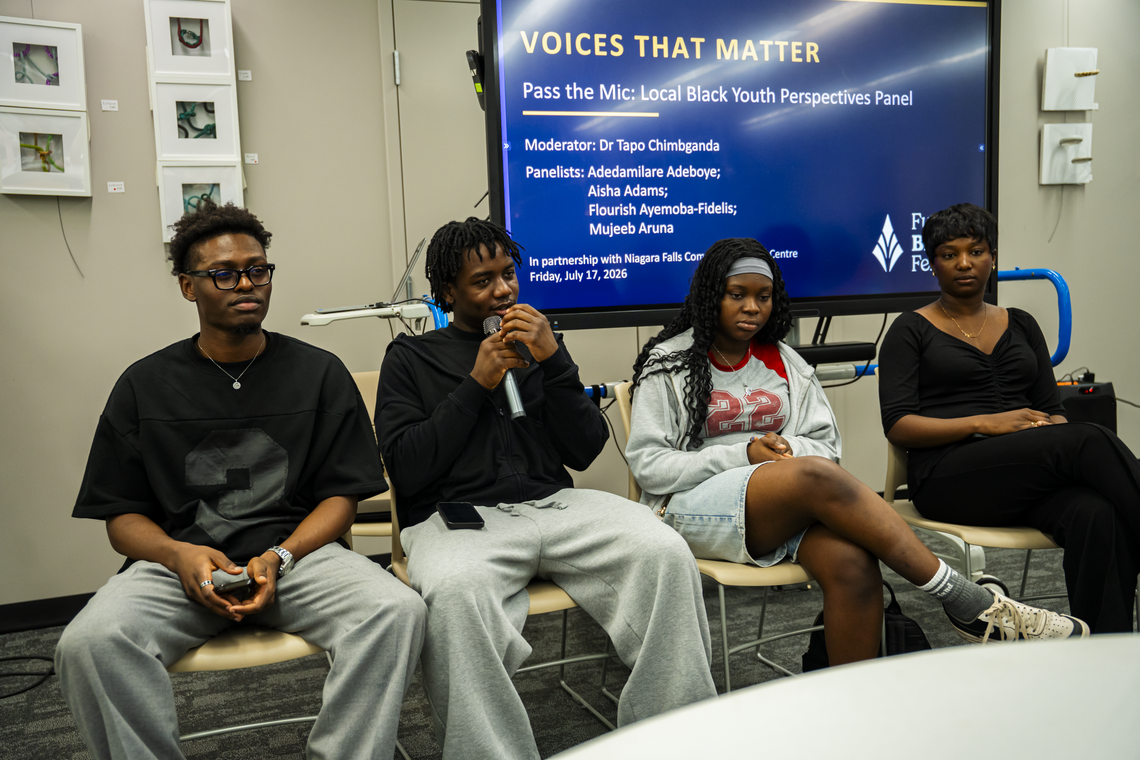
“For many Black students, university or college is where they get to experience a sense of community and belonging in the educational system through Black students’ associations,” Chimbganda says. “Most universities, if not all, have one or more clubs specifically for Black students. But why wait? High school is a lot more challenging in many ways, but most especially in peer-to-peer anti-Black racism, discrimination, and exclusion,” she says. “That’s why having BSAs in high schools is such a great solution to many of the problems Black students face as they navigate secondary education.”
The local news feature that opened a door
The program launched at one school in the Niagara Region in 2024, but the hope of greater expansion brought the same challenge all charities face: funding. The District School Board of Niagara (DSBN) was on board with the program but didn’t have the resources to grow it. “With the schools that already had BSAs, we saw the difference compared to the schools that did not,” Michael says. So when funding became available through a federal grant, they used it to expand the program to more schools, allowing the board to see the impact spreading. Eventually, the board began sponsoring the program across the district, providing them with more support.
Just having that footprint in the media, so when people try to verify, it comes up. You can see the work we’re doing, our impact.
Ijeoma Michael, Future Black Female
To date, 11 BSAs have been launched throughout Niagara Region’s 16 secondary schools. However, efforts to get into Catholic schools in the region weren’t working. It took only one article for that to change. “Obviously, we had been trying to reach [the Catholic school board], but then they saw that the program was working, because they did make reference to the CBC article,” Michael says, adding that having a consistent media presence has been a win for the organization over the last few years. “Just having that footprint in the media, so when people try to verify, it comes up. You can see the work we’re doing, our impact.”
Media in the age of DEI drift
Up the highway from Niagara in the Greater Toronto Area, another Black-led and Black-serving non-profit is also seeing the impact of telling stories to a diverse, values-driven audience. Reducing the number of Black youth experiencing homelessness is close to the heart of REST (Restoration and Empowerment for Social Transition) Centres founder Dagma Koyi. Having her own lived experience, she knows what’s working, what’s not, and what’s needed. Toward the end of last year, her organization hosted its first Black Youth Housing Equity Summit, where she says a fire was set in the hearts of community members eager to see change.
“People were so activated,” Koyi says. “They were like, ‘What’s the next thing? If you say jump, we’re all ready.’ I literally had those types of responses.” REST Centres has been helping youth in Metro Toronto find stable housing through the head lease model, where REST leases units from local landlords and then subleases them to youth. Then, earlier this year, the organization took another bold step: purchasing a property with government funding and using it to create housing specifically for Black youth to break free from housing insecurity.
REST House made headlines when it opened, bringing attention to Black youth homelessness. The voices of Black youth were the focus of the organization’s storytelling, aligning with their work, which centres youth in everything they do. “For us it was a celebratory moment and a milestone, so it was good for us to share that with the community,” Koyi says.
“Honestly, having just someone give you a chance, just a place to rest . . . it’s so important in a world where everything is so busy,” REST Youth Council member Diane Otieno told media in January.
We understand the climate we’re currently in and that there’s been a shift around that – and funding has shifted.
Dagma Koyi, REST Centres
But in the months following the ribbon-cutting, Koyi says, the organization has faced a headwind many Black-led and Black-serving organizations have been navigating of late: the diversity, equity, and inclusion shift. While the pushback to DEI hasn’t been as fierce (or as politically motivated) as it has been south of the border, Koyi says it is quietly present. “Coming into this year, there was just a lot of shifts because we started the Black Youth Housing Equity Summit last November, then with Trump and everybody just crushing equity . . . That whole narrative shift was thrown out,” she says. “We have been unapologetic in the fact that we say we’re serving Black youth. We are B3 [Black-led, Black-serving, and Black-focused]. That’s who we are, and we have made it known that this is who we are, and we explain the why. No, we’re not changing our mission, but we understand the climate we’re currently in and that there’s been a shift around that – and funding has shifted.”
Future Black Female’s leadership agrees. “The goal is to advocate, and I cannot do so without understanding the ethics,” Chimbganda says. “Showing up ethically, even in the media, requires that we do not downplay or dismiss the real issues, especially knowing that our words resonate and endure beyond our 15 minutes in the limelight.”
Black non-profit storytelling: Against the odds
Getting those words to resonate and endure has been challenging, though, for Canada’s Black communities because of a relationship with the media that has been historically hostile. Biased crime reporting, stereotyping, and an absence of representation in newsrooms across the country have translated into a poor relationship with the community. Despite calls for change (some of which this article’s author helped to write), newsroom diversity remains a work-in-progress. Last year, 19 outlets that participated in the Canadian Association of Journalists’ Diversity Survey reported having no racialized or Indigenous journalists, and 68% had no Black journalists. The shrinking Canadian media landscape is further compounding efforts to improve coverage.
In the non-profit sector, the stories are abundant, but the resources and capacity needed to tell those stories aren’t. Vantage Point CEO Zahra Esmail says outdated structures are holding them back. “There’s so much untapped power in the non-profit sector,” she says. “If we can take the reins a bit more, then not only can we tell our own story, but we can influence changes that are going to better support our sector. Vantage Point advocates for higher admin allocations and more flexible core funding, because we believe that non-profits know what the community needs.” Esmail adds that more flexibility allows organizations to create systems, processes, and outreach – different methods to bring more people in to create that greater impact.
I understand the value of a platform in shifting the narrative.
Tapo Chimbganda, Future Black Female
Having endured years of underfunding, Black-led and Black-serving non-profits struggle to develop the internal capacity to sustain the work they’re doing and the impact they’re having. Since a report documenting the gap was published six years ago, there has been some progress (the establishment of an endowment fund dispersing grants through the Foundation for Black Communities, the creation of the Supporting Black Canadian Communities Initiatives, for example). Still, Koyi says, Black non-profits have many stories waiting to be told that audiences need to hear. “A lot of the big organizations have internal capacity, and they have fundraising teams, communication teams,” she says, “and a lot of money coming through the door is by getting people to be aware of the work they’re doing. You have a lot of [B3] organizations doing impactful work, but nobody knows.”
“I understand the value of a platform in shifting the narrative,” Chimbganda says. “In many cases, Black voices are the last ones called upon, yet we are the first to be adversely affected. If I dilute my message, I equip the systems that harm us with more ammunition.”
Disclosure: Nadia Tchoumi served as the executive director of the Canadian Association of Black Journalists from 2018 to 2024 and helped co-author the “calls to action.” She has also worked with both Future Black Female and REST as a media consultant.