This is the first piece from Frey Blake-Pijogge, a writing fellow working with The Philanthropist Journal and The Independent in Newfoundland and Labrador.
Frey Blake-Pijogge is one of five writing fellows working with The Philanthropist Journal and a partner outlet over the next year. Rideau Hall Foundation has awarded funding to The Philanthropist Journal to support five Black and Indigenous early-career writing fellows in collaboration with five independent, local journalism outlets across the country. IndigiNews has been providing mentorship support and published this story too.
“We’re excited to see how this approach supports the learning and development for the fellow, builds stronger connections with publications and our readership, and brings new voices and content – all while supporting the critical role that local journalism plays in communities across Canada,” says Leslie Wright, executive director of the Agora Foundation and editor-in-chief of The Philanthropist Journal. “We believe good journalism matters more now than ever – and the profession needs a diversity of early-stage journalists from across Canada who see themselves in this field helping to rebuild trust through fair and comprehensive reporting.”
Learn more about Frey in this Q&A with The Independent from June 2025.
Oswald Allen sits at his kitchen table, eager to share caribou hunting stories. Photos of family members decorate the walls of his home, where the heat from his woodstove is a welcomed comfort from the winter cold outside on this late January day. The 75-year-old Inuk hunter hopes to one day hunt caribou again but doesn’t know if he’ll live to see the day. “I’d just like to see another hunt before I go on to the next lifetime.” That hunt, he says, is “what we live for” – “we” being he and others in Allen’s town, the tiny Inuit community of Rigolet on Labrador’s coast.
A former Canadian Ranger of 25 years and a retired heavy-equipment operator, Allen says a caribou hunting ban has contributed to food insecurity in the community. “These days, seniors can’t afford the meat in the store here, so that took a lot away from us,” he explains.
In 2021, Inuit Tapiriit Kanatami, a political organization representing the interests of Inuit across the Inuit Nunangat homeland, said that country foods make up between 23% and 52% of the protein in the average Inuit diet and that before the recent decline in herd numbers, caribou meat “was the #1 source of protein and iron for most Inuit.”
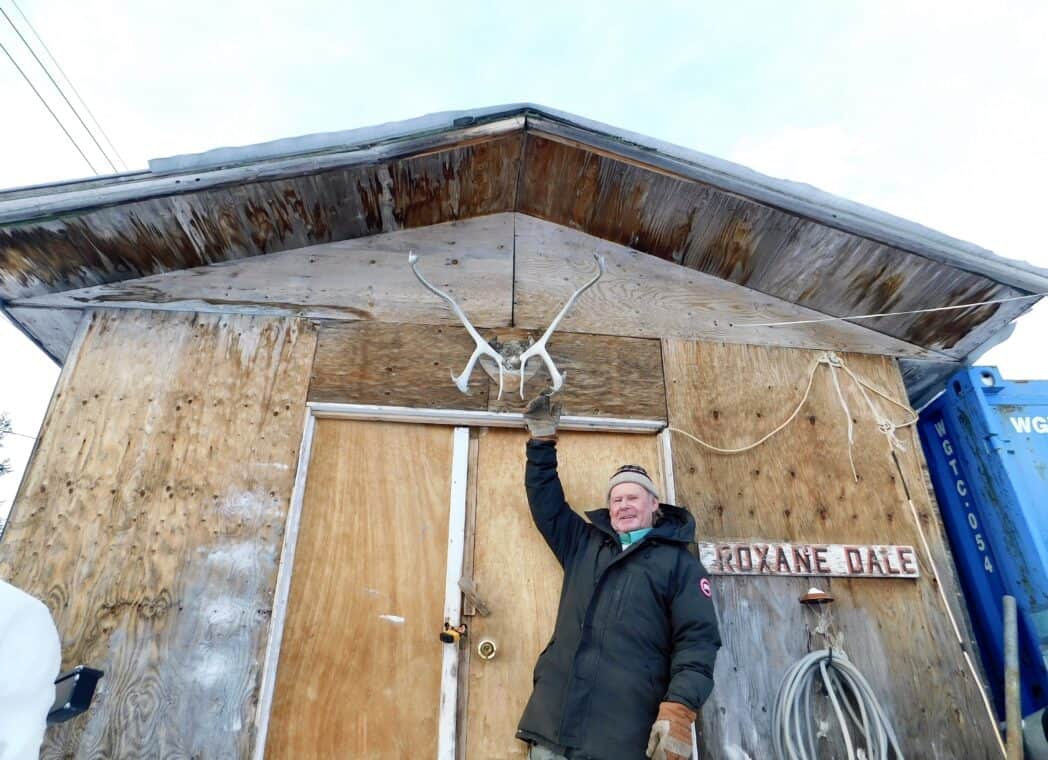
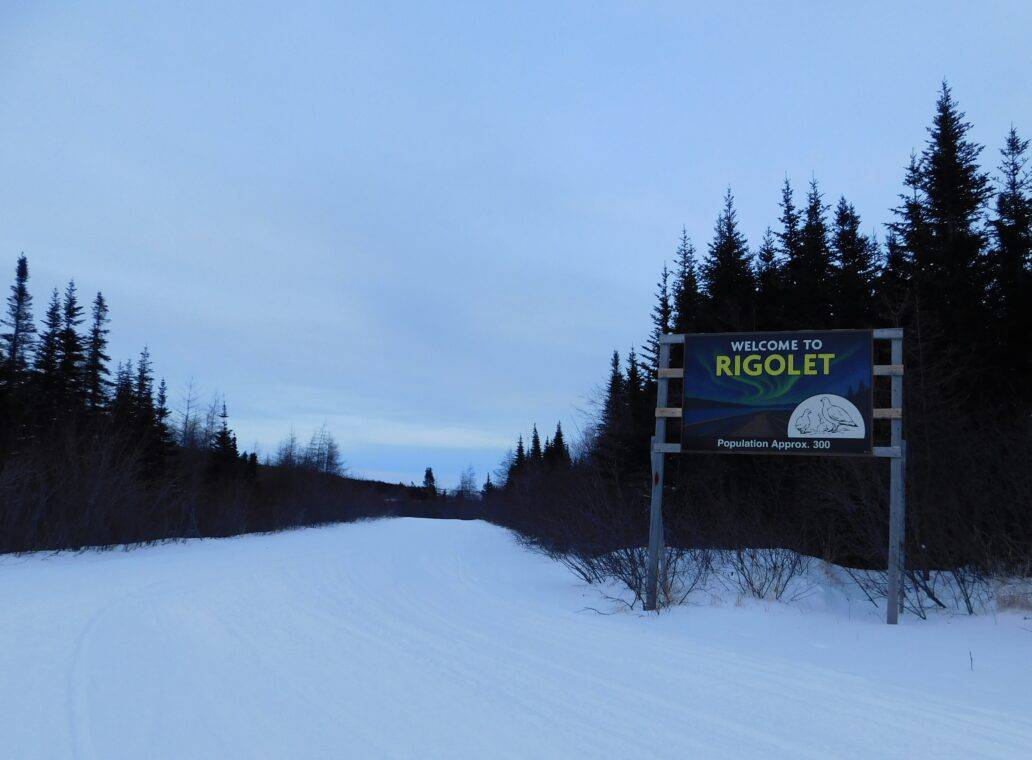
Rigolet has a population of approximately 300 people. The small, tight-knit community, where Inuit families have lived for generations, is surrounded by hills and the cold waters of the North Atlantic Ocean. It’s the southernmost of five communities in Nunatsiavut, the semi-autonomous Inuit territory and government established through the Labrador Inuit Land Claims Agreement of 2005.
In 2013, the Government of Newfoundland and Labrador instituted a five-year ban on hunting of the George River caribou herd, which historically migrated between Labrador and northern Quebec. By 2012, the once thriving herd had diminished to just 27,600 caribou – a 99% drop from its 2001 estimated population of around 800,000. By 2022, that number had further declined to just over 7,000 animals.
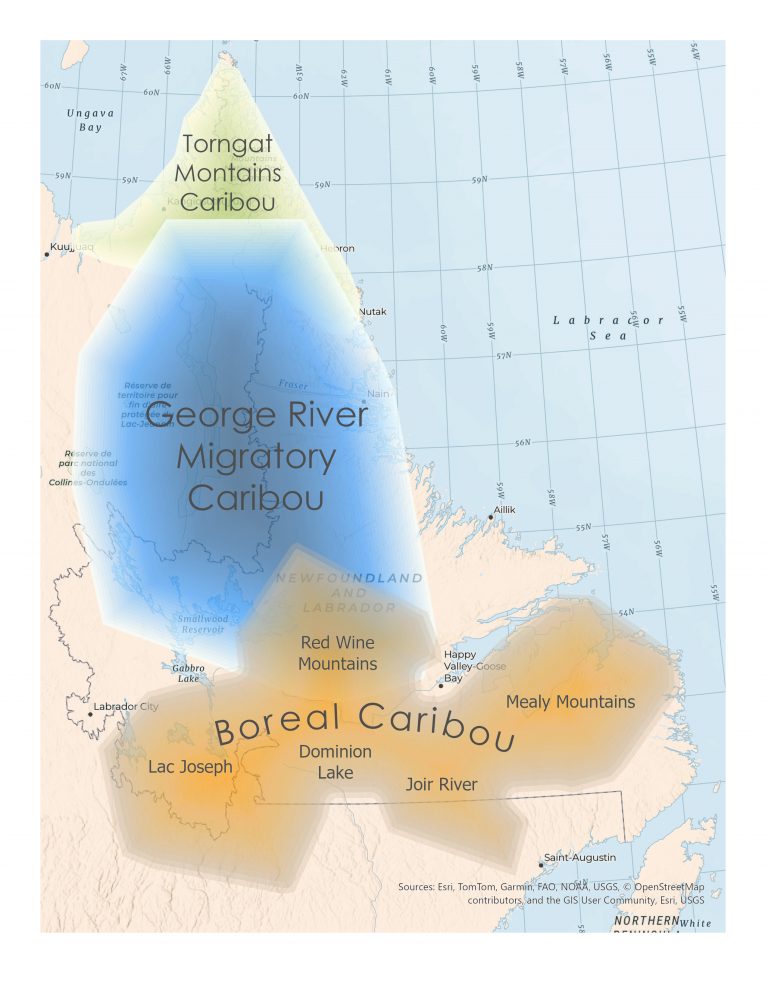
Once the largest herd in the world, the George River caribou no longer migrate to Quebec. They are found only in Labrador.
Inuit in Nunatsiavut have been hunting caribou since time immemorial. But the animal is more than a food staple. It’s also deeply connected to Inuit life, with knowledge of hunting, harvesting, and utilizing all parts of the caribou passed down from one generation to the next.
A ‘perfect storm’
How did the George River herd reach such low numbers in the lead-up to the 2013 ban? A “perfect storm,” says Jim Goudie, Nunatsiavut’s deputy minister of lands and natural resources. “You had climate change, which affected their food supply. You had a caribou group that grew so large the ecosystem they were in couldn’t sustain the number,” Goudie explains, adding that the unregulated harvest of caribou and disease were other factors leading to the dramatic decline.
In the time leading up to 2013, Goudie says, a biologist working on a caribou collaring program noticed something was off. “At the same time,” he says, “traditional knowledge coming in from Inuit harvesters was that caribou health was on the decline.”
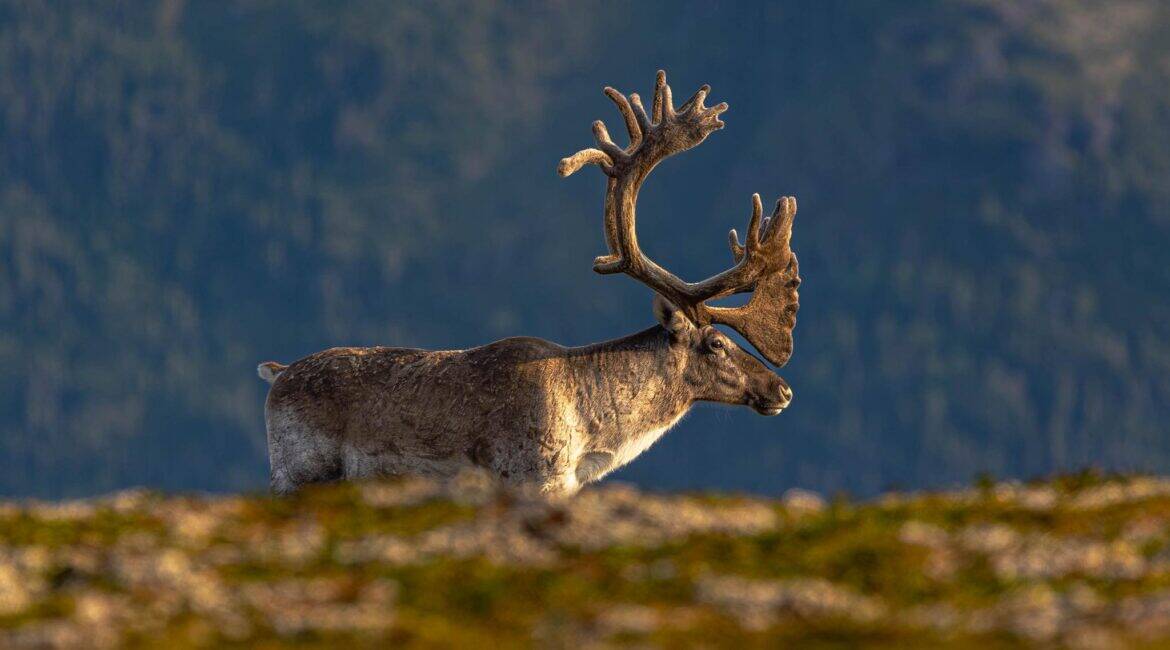
The same was happening within other Indigenous nations in the region. In 2012, Innu conservationist Valérie Courtois travelled with a group of elders to the George River, where Innu and caribou have been meeting for more than 8,000 years. “There we heard the news that the size of the herd had dropped to emergency levels,” she said. “At the same time, other Indigenous Peoples in the Ungava were noticing the steep decline and discussing it.”
Then the surveys began, Goudie explains, “and every year there was a drop.”
In 2013, the provincial government noted that “while migratory caribou populations are known to cycle naturally over a period of 50 to 70 years, the cause of the current and continued decline of the George River caribou herd is not clear.” The province said its research indicated “low pregnancy rates” and “high adult mortality, estimated at approximately 30 per cent annually.”
Part of the broader woodland caribou subspecies, the George River herd historically migrated between the Ungava Peninsula, on the eastern side of Hudson Bay in northern Quebec, to the Labrador coast. Other caribou in Labrador are part of the region’s sedentary herds and don’t span as much territory as their migratory cousins. But the Red Wine Mountains herd, Lac Joseph herd, and the Mealy Mountains herd are all under hunting bans, too.
Another sedentary herd lives in the Torngat Mountains National Park region of northern Labrador. The Torngat Mountains herd had an estimated population of 2,420 caribou in 2021 and can be hunted, but harvesters are allowed to hunt inside the park only and have to report their harvests to the Nunatsiavut Government and Parks Canada.
Nunatsiavummiut aren’t the only Indigenous Peoples affected by the ban. Inuit in Nunavik, in northern Quebec, Cree communities in Quebec, and Innu on both sides of the Quebec-Labrador border have historically hunted the George River herd.
More than food
Alexis Palliser, 40, is a life skills teacher at Rigolet’s only school, Northern Lights Academy, home to around 60 students. When she was growing up, her father would hunt caribou to feed the family. “We had it probably five times a week out of seven days,” she says. “It’s just a part of us – and in every which way, from crafts, to keeping us warm, to feeding us.”
Thirteen years on, the ban is profoundly affecting Inuit in Nunatsiavut, not just because of the loss of a vital source of food, but in other ways, too.
Oswald Allen hunted the George River and Mealy Mountain herds for decades. He was 15 or 16 – “quite old,” by his account – when his father taught him to hunt.
Allen shares a humorous anecdote from one of his early hunts, when he and his father “had this old feller with us,” who smoked a pipe, he recalls. “When we left the cabin, we went down over a big bank, [and] when they stepped on to go over the bank, he fell off.” The man “rolled to the bottom of the hill,” and when the others got to him, “he still had his pipe in his mouth.” After they gathered themselves, the hunters continued on their way.
Allen says the hunting ban has forced Inuit to hunt other animals. “We had to go to other sources of food like partridges, ducks, geese, and that other stuff while we live off of the land,” he explains.
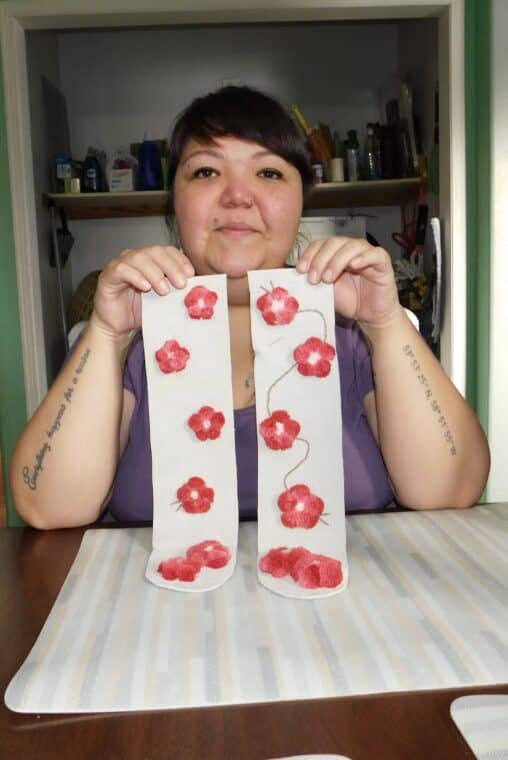
In 2024, Palliser wanted to learn how to caribou tuft, a traditional art of stitching fur to create three-dimensional images. But because of the hunting ban, she was forced to turn to online sources for caribou fur. “Just imagine: years ago they just had to do it themselves. And now you can just click a button and it comes in the mail and it’s already done for you,” she says, explaining that the fur she buys is pre-cut and dyed.
Palliser is making a pair of mukluks, featuring red-dyed caribou-fur-tufted flowers fastened to moose hide. She doesn’t know where the caribou fur is sourced from but says it feels real.
Derrick Pottle, an elder from Rigolet, could hardly believe it when he got news of the hunting ban in 2013. “It’s the same reaction I have today: disbelief. We went from being able to be a hunter and provider to becoming almost like begging for a piece of caribou meat,” he says. Pottle is a soapstone carver, hunter, trapper, and guide. Today, his five freezers, once filled with caribou meat, sit empty. Before the ban, he had enough meat to feed his family and others in the community. “It’s like something took something away from me. I feel like a big part of me is gone,” he says. “This time of the year, I would be gone or getting ready to go for a caribou hunt.”
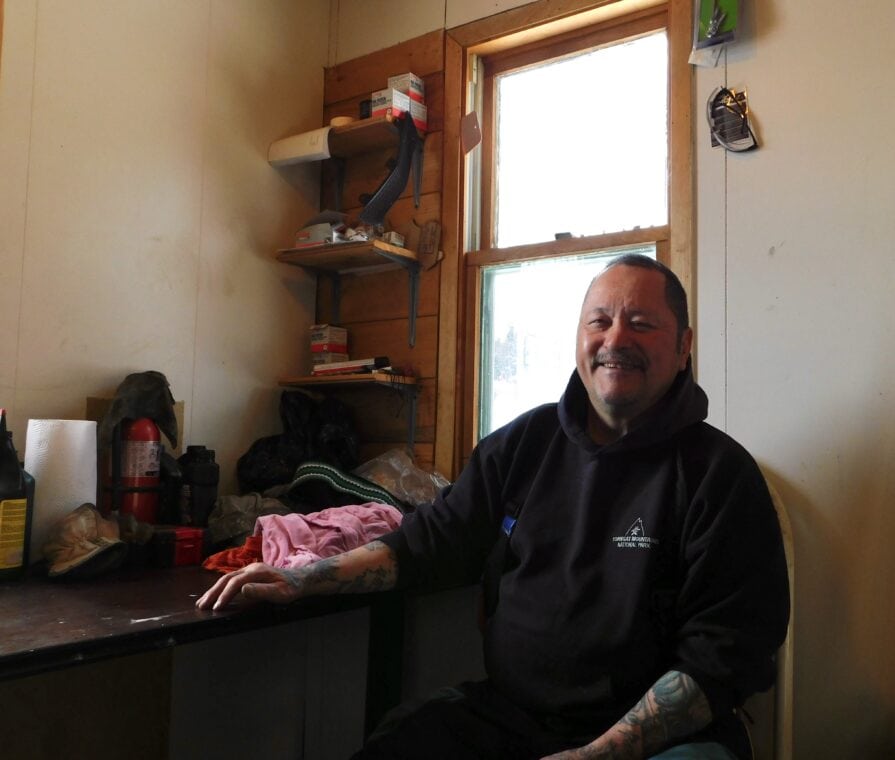
Pottle says the inability to hunt has taken a toll on his mental health. “I would call friends from Rigolet to Nain and beyond into Nunavik,” he recalls. “I went hunting right into Nunavik over the years, and you had that social interaction. We connected and communicated, but that’s gone.”
Today, Pottle uses antlers, bones, hooves, and teeth to make artworks he sells through commissions. “I incorporate any part of my natural environment. You know – marine mammals, land animals. I incorporate that into my work,” he says.
Seventy-seven-year-old Rigolet Elder Edward Allen Sr. says the hunting ban “took away our right to traditional food.” He describes the hunt as having been “a traditional part of life – even could be considered a spiritual part of life.”
Allen Sr.’s father taught him how to hunt caribou, and they would travel by dogsled, he recalls. “People for thousands of years depended on caribou for food. They also depended on caribou for clothing,” he says. “Caribou was used for boots, [and] even the sinew on the back of the caribou on the spine was used for thread for sewing,” the elder explains. “There’s a lot of things that we lost, that we don’t have access to anymore.”
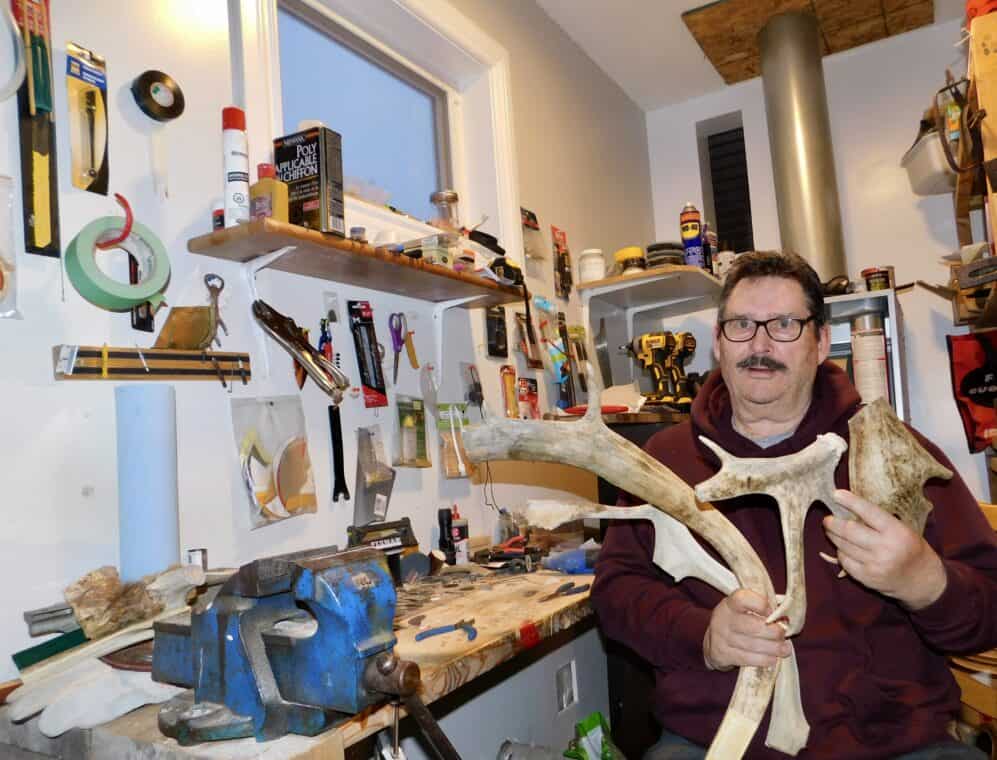
As a hobby, Allen Sr. creates jewellery and ulu handles made from caribou antler, something he took up in 1982 (the ulu is a culturally significant knife traditionally used by women to cut meat for food and skins for clothing). There’s a high demand for caribou antler earrings in Labrador, so he can sell when he wishes to.
Sarah Baikie, a grasswork artist and Anglican priest in Rigolet, says her younger self couldn’t have imagined what the future held when it comes to caribou. “If this was when I was growing up, I would have thought it would have been crazy if someone said that there might be a time when you won’t be even able to have caribou.”
Baikie was born outside Rigolet in the former Inuit settlement of Rocky Cove and grew up eating caribou from various herds. Every meal of caribou was a good meal, she says, but her favourite dish was the caribou soup her grandmother would cook on the woodstove, with doughboys. “We’ve always been so used to that part of our diet, and now not being able to hunt [is] devastating to everybody,” she says.
Baikie’s late husband, Garland, had “a lot of stories about hunting the Mealy Mountain caribou,” she recalls, explaining that he would sometimes travel by dogsled. Today, at 75, Baikie creates artworks using saltwater grass. Before Garland passed, she says, he would carve basket toppers out of caribou antler for her.
‘Craving something they can no longer have’
An entire generation of Inuit youth is growing up without the caribou hunt as a part of their life, and Oswald Allen is noticing the impacts. “I got a little great-grandson, and he don’t know about the caribou or nothing like that,” he says. “So, it’s gonna be hard on them – they’re not gonna know.”
Pottle says he has hunted in the Torngat Mountains several times since the George River ban. “I try to keep it to maybe two or three caribou,” he explains, “one for my family and maybe two to share around.”
A source of traditional food has been eliminated. It’s left people craving something that they can no longer have.
Edward Allen Sr., Rigolet Elder
Palliser says the absence of caribou as a food staple is disrupting the relationship between the animal and Inuit. “A lot of the younger generation, they prefer moose over caribou because they weren’t raised on caribou like we were.” She says she’s “scared that my grandchildren are never ever going to hunt caribou.”
“A source of traditional food has been eliminated,” as Allen Sr. puts it. “It’s left people craving something that they can no longer have.”
Meanwhile, the Nunatsiavut Government is making efforts to offset the loss of caribou meat for Nunatsiavut beneficiaries. “We’ve got multiple programs on the go,” Goudie says, explaining that the Inuit government sends conservation officers to hunt moose – with licence from the province – in Gros Morne National Park in western Newfoundland. He says the moose is processed locally, then shipped to Labrador, where the meat is distributed to community freezers.
Goudie also describes another program called the Caribou Project. “For a few years, we were accessing caribou from a different region in Canada and shipping it over and delivering it to Nunatsiavut beneficiaries,” he explains. But obtaining caribou from outside the province isn’t always feasible, at which time Nunatsiavut procures “other wild meats from Quebec, like elk, wild boar, and bison.”
Supplementing caribou with meat from other places may put food on tables in Nunatsiavut, but it doesn’t address the rupture to an ancient way of life and the knowledge that comes with it.
To prevent an entire generation from losing that knowledge, Oswald Allen would like to see the Nunatsiavut Government launch a caribou harvest program that would allow Inuit youth and experienced hunters to travel together to Nunavut, where hunters could teach youth to hunt. “If they’re gonna get caribou up there, send your own hunters down and get meat for seniors,” he says. “And you should take a couple of young people along to teach them the traditional life. Keep it alive, so they don’t forget it.”
Caribou harvest programs elsewhere have been successful in teaching Indigenous youth how to hunt and harvest caribou. The 2021 Caribou Harvesting Project in Tadoule Lake, Manitoba, enabled Sayisi Dene hunters and elders to take youth out on the land.
Indigenous Nations unite to save the herd
“You ask different people, you’d get different answers,” Goudie tells me when I ask him how much the herd would have to recover before Nunatsiavut would support a hunt. Then he cites a specific number: 30,000. That’s the number he says a coalition of First Nations and Inuit, including Nunatsiavut, came up with after uniting in 2013 in an unprecedented effort to save the herd.
Four years later, in 2017, that coalition, the Ungava Peninsula Caribou Aboriginal Round Table (UPCART), released a strategy, A Long Time Ago in the Future: Caribou and the People of Ungava. The seven signatories agreed to a five-pronged action plan that included an Indigenous sharing agreement; a research and monitoring plan; a habitat-management and environmental-impact plan; a stewardship, engagement, and communication plan; and a social and economic plan.
“Labrador Inuit are prepared to place the well-being of the caribou on the Ungava Peninsula first and foremost,” the Nunatsiavut Government said in its submission to the UPCART strategy. “Caribou have helped to sustain us over generations and we recognize that caribou need our support in this time of decline.”
“The emphasis on Inuit culture and identity remains,” Nunatsiavut continues in its submission. “The emphasis is not nostalgia or a sentimental wish to recreate conditions of life that have passed, nor to end all development of every kind. Instead, it recognizes that the use of the land has been key to Inuit life and if crucial links with the land are broken, the Labrador Inuit way of life is threatened.”
In 2018, some UPCART members agreed to a roughly 1% harvest – 90 caribou – of the George River herd. Since First Nations and Inuit communities in Quebec have access to the Leaf River herd, the coalition members agreed to give the George River quota entirely to Labrador communities. A proposal of 35 caribou for Innu Nation – which represents the two Innu communities in Labrador, Natuashish and Sheshatshiu – 35 for Nunatsiavut, and 20 for the NunatuKavut Community Council was rejected by Innu Nation, which left the coalition, saying in 2018 it would hunt 100 caribou from the George River herd and continue work on its own caribou management plan.
Despite UPCART’s recommendation, the Government of Newfoundland and Labrador has never approved a harvest quota for Innu or Inuit in Labrador. While the Innu – who have not signed a treaty with Canada and maintain that their lands are unceded – have exercised their self-determination in continuing a limited hunt, the Nunatsiavut Government has maintained its commitment to the ban.
In 2024, the Nunatsiavut Government estimated that the herd’s population had increased to 8,600. “The adult population has grown an average of seven per cent per year from 2018 to 2024,” it said at the time. “Calves now make up 26 per cent of the population, and calf recruitment levels are the highest they have been in 60 years.”
Despite the early positive indicators, the herd still remains at critical levels, and the hunting ban remains in place. “‘Critical’ in this case would mean that if harvesting continued unabated the same way that it was [before the ban],” Goudie explains, “there would be a point of no return for the caribou herd.” He adds, “Essentially, we would hunt them into extinction.”
The next survey is expected in July 2026.
Goudie says that even if the George River herd recovers to 30,000 animals, any reinstated hunt “won’t be anything like we’ve seen in the past.” If there were to be a hunt at all, “it would be very, very limited.”
Diminishing hope for the herd’s future
The loss of caribou is still a major topic of discussion, at the supper table and through advocacy. “It gets very old talking about it,” Pottle says, reflecting on the number of media interviews Nunatsiavummiut have done on the matter. “But at the end of the day, it doesn’t go anywhere, really.”
Palliser remembers feeling optimistic in 2013 that the ban would be temporary. “I was thinking, ‘Okay, it’ll just be five years and we’ll be able to hunt them again,’” she says. “And now it is 2026.”
The provincial government at the time “didn’t do a good job actually portraying the issue to people,” Goudie says, reflecting on the announcement 13 years ago. “This is a 20-, 30-, 40-, 50-year problem, and I don’t think that was made very clear to the general public at the time.”
Pottle clings to hope, but as with others, that hope is fading. “Myself and other people my age and generation honestly openly talk about how we don’t think we’ll ever live long enough to see a caribou hunt like we had before,” he says.
Recovering from the rupture to such a profound part of life in Nunatsiavut – if it can be healed at all – will be an uphill battle. If the herd survives, Allen Sr. says, “I don’t think it ever will come back the same.”