Contributor Yvonne Rodney looks at how organizations are responding to the aging factor in volunteerism and what they’re doing to encourage volunteers to engage and re-engage.
Age has long been an important consideration for volunteering. Statistics Canada data from 2018 show that while participation rates for older volunteers decreased with age, older volunteers (age 53 and up) contributed more hours on average annually than any other age cohort. Older volunteers provided consistency, stability, and availability during core working hours, and religious organizations, hospitals, and social service agencies have long benefited from their contributions.
Enter the COVID-19 pandemic. Volunteer participation rates dropped significantly during this period. Organizations grappled with their reliance on volunteer labour in general and what to do differently. Hospitals, one of the sectors most reliant on older volunteers to provide value-added services like way-finding and patient support, had to shut down their volunteer programs. Women’s Auxiliary Volunteers, with deep history in fundraising and service provision, inclusive of hospitals, are part of an aging demographic. And according to a StatsCan analysis on volunteering between 2018 and 2023, participation has not returned to pre-pandemic levels across all sectors. Hospitals have seen the sharpest (47%) decline.
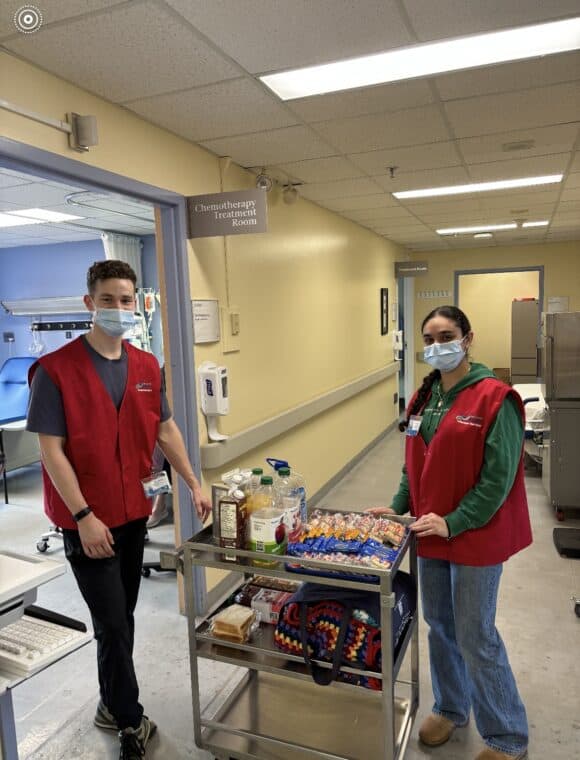
Volunteer Toronto supports 23 hospitals and clinics (special thanks to Cara Eaton, senior director of strategy and growth at Volunteer Toronto, for providing some useful data). Kasandra James, director of programs and organizational systems, notes that during the pandemic, hospitals were among the first to send volunteers home. Within a year, however, hospitals started to bring volunteers back. But given that a core component of their volunteers were older, many did not return. And for those who eventually did, the roles previously performed in some cases shifted to reflect changing organizational priorities and changing priorities of volunteers themselves.
There is a need to evolve the [volunteer recruitment] system towards who are our future volunteers . . . and what is important to them in their volunteering.
Kasandra James, Volunteer Toronto
When it comes to recruitment, while all groups are welcome, professionally trained newcomers and post-secondary students in healthcare programs have become the employees and volunteers of choice within the hospital sector. “There is a need to evolve the [volunteer recruitment] system towards who are our future volunteers . . . [and] what is important to them in their volunteering,” James says.
Florence Gilbert (Edebiri), manager of volunteer services and non-clinical student placements for the Scarborough Health Network (SHN), concurs that volunteer participation rates are down post-pandemic, with approximately 1,100 volunteers now compared to 2,200 pre-pandemic across SHN’s three hospitals and satellite sites in Toronto. They too saw a drop in the number of older volunteers, their most reliable group. She describes SHN as being in a rebuilding and recruitment mode to attract retirees and other age groups who can be more consistent – as long as they have “a great smile and a good attitude.” But Edebiri, from her experience in recruiting hospital volunteers, finds that “mature volunteers [currently] are working longer, working part-time, and supporting their children through grandparenting.” They do not have as much time to give as before.
Nova Scotia Health (NSH) engaged about 6,000 volunteers across the province pre-pandemic. Responsible for more than 40 facilities with 17 volunteer coordinators – some overseeing multiple facilities – NSH now has between 2,100 and 2,200 volunteers. And guess what? Older volunteers tend to be their longest-serving. Soroush Moghaddam, assistant manager of volunteer services, credits the pandemic shutdown with providing NSH needed time to develop a more robust volunteer data-management system. Now they have a better understanding of how volunteers are coming in, retention rates, and other important data not heretofore available. “We are getting more and more younger volunteers,” Moghaddam says. “Older volunteers’ numbers are not as high as pre-pandemic, but we are building up.”
Like SHN, Nova Scotia Health has started to more strategically target post-secondary volunteers needing hours for their respective academic programs.
Habitat for Humanity Canada has a strong core of volunteering from older workers. Janine Armstrong, senior manager of affiliate programs, and Jennifer Fowler, director of communications, both concur that their older volunteers are the ones who provide the most reliable hours. Like many organizations, Habitat Canada saw a dramatic drop in volunteerism over the pandemic, and while the numbers have been increasing, in 2024 local Habitats across the country still had only about half the number of volunteers they did in 2019.
But things are not as dire as the numbers indicate. “Though we have fewer volunteers today, they are giving more of their time,” Fowler says. “In 2024, almost 17,000 volunteers gave more than half a million hours of their time to Habitat in Canada.” About a third of Habitat’s volunteers are youth aged 16 to 24, the biggest growth area in volunteers since the pandemic.
Re-engaging
Given the “aging out” of volunteers and the low re-engagement numbers to date, what are these organizations doing to woo volunteers back?
Paying attention to trends happening in the world and sharing stories and photos of the families being helped by the work volunteers do helps Habitat keep its engagement efforts relevant and connects volunteers to the mission of the organization. Fowler admits it helps that the Habitat brand is strong. For many of their volunteers, it falls on their “bucket list” wish. “Volunteering is built into the fabric of Habitat.”
The younger generation wants to know that what they are doing is making an impact.
Janine Armstrong, Habitat for Humanity Canada
“If [Habitat] didn’t do what we do . . . here in Canada, there would be about 9,000 people who would be living in housing precarity,” Armstrong adds. “The younger generation wants to know that what they are doing is making an impact.”
What their statements underline is the need to connect volunteer re-engagement to meaning-making. Volunteers want to contribute to something impactful and feel they are making a difference where it matters to them personally. Whether working in a store, a gift shop, a remote community, or front and centre in service delivery, these organizations, in their recruitment efforts, are intentionally making a case for how volunteers will personally benefit from doing what they do – even when they have to surmount a few hurdles to get to that good work.
Find the passion in your program for each volunteer. Different people will choose something based on an experience.
Florence Gilbert (Edebiri), Scarborough Health Network
For example, those keen to volunteer with SHN must pay out of pocket for the required health screening, uniforms, ID badges, and a portion of the “vulnerable sector” background check done by police. One must really want to volunteer in a hospital to do all that. In exchange, SHN offers volunteers work in an inclusive environment where one can find a sense of belonging, have a meaningful experience, perform clearly defined roles within each unit, and become involved in a number of SHN initiatives and committees, including fundraising, planning, ambassador programs, social media, and technology. One group of SHN’s post-secondary volunteers developed an interactive wayfinding application that is being rolled out across SHN sites. How cool to know that something one voluntarily worked on is making such a difference! Edebiri is adamant that when volunteers connect with the work they do and feel a sense of belonging, they become more engaged. “If I belong in a place, my passion is there and I would do it without money . . . Find the passion in your program for each volunteer. Different people will choose something based on an experience.”
Because Moghaddam thinks post-pandemic staff hires at Nova Scotia Health have gotten used to functioning without volunteers, re-engagement efforts are partially directed at training these new staff members on how to engage with volunteers and ensure that they have meaningful experiences when they come in. That way, volunteers will stay longer in their roles. “Building relations with staff takes time,” he notes, but “making a case for why volunteers matter in quality service care and can contribute to lowering the stresses on staff” is part and parcel of NSH volunteer engagement priorities. And they are well on the way there. “Both patients and volunteers [are] coming and telling us how fulfilled they feel about what they do,” he says. “This is like ‘boosts of energy’ for us . . . [It] makes such a big difference in our energy in preparing our volunteers for success.”
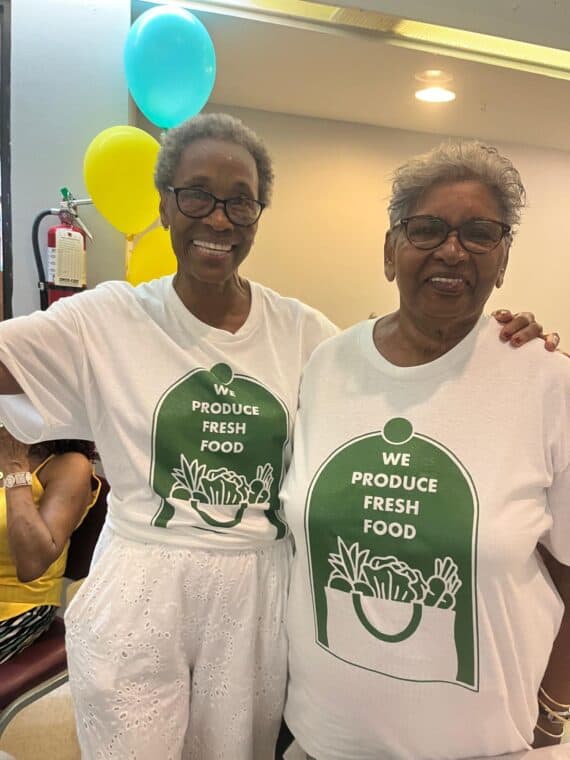
In summary, volunteer participation overall has not made it back to pre-pandemic levels. In particular, older volunteers who traditionally provided more consistent and reliable daytime hours have not returned in the same numbers as before. They are also aging out, and the new, older volunteers are making decisions between working, supporting families, and volunteering. We also heard from the organizations interviewed that post-secondary students, with credit hours to earn, are emerging as a sector for recruitment targets and that re-engagement efforts are connecting volunteering to meaning-making.
Our society has come to depend on volunteers doing what they do. Cara Eaton, at Volunteer Toronto, says that of the 23 hospitals and clinics they support, “these agencies need to recruit 3,740 volunteers in 2025/2026.” A tall order but not insurmountable if each individual does a little bit, whether formally or informally.
A question that hangs
But even as organizations continue to examine the aging factor in volunteerism, even as they look for ways to encourage volunteers to engage and re-engage in providing consistent and value-added experiences for those served, James voices a concern about our society’s reliance on volunteers, especially for provision of essential services such as food delivery. “Should we be dependent on the goodness of people to feed our most vulnerable?”
Her question is not new. It comes up time and time again in the volunteerism conversation. Paying for work versus getting it for free. Where do we draw the line? And it connects to a conversation with a newly retired man who decided to volunteer his time delivering food to seniors. It was his way of giving back and keeping himself busy. But when another organization offered payment for doing the same work, he went for the money. In these days of tariffs, a slowing economy, and rising prices, his action is understandable, leaving James’s question hanging in the air, waiting for gravity in the form of a good answer, to find for it a concrete landing.
Editor’s note: The third paragraph of this piece was corrected on November 12, 2025, to clarify that hospitals were among the first to send volunteers home during the pandemic, not necessarily the first.